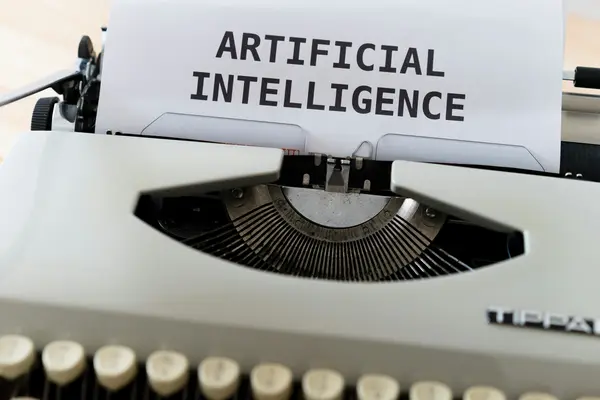

There has been a wave of news stories and videos showing what AI can do — from writing essays to diagnosing diseases to powering self‑driving cars. China has even deployed AI‑powered robots to help guard borders, and factories around the world now use robotic arms that work with incredible speed and precision. Delivery robots roll through city streets, drones map farmland, and customer‑service chatbots handle millions of queries a day.
It’s easy to get swept up in the excitement and forget something important: Artificial intelligence, for all its progress, still has very real limits. Understanding these limits helps us stay grounded, informed, and in control of how we use technology.
1. AI cannot feel emotions
AI can simulate empathy or enthusiasm, but it doesn’t actually feel anything — no joy, fear, love, or frustration. It recognises patterns in language and responds accordingly, not because it cares.
2. AI cannot understand context like humans
Humans draw on lived experience, culture, intuition, emotional memory, and common sense. AI has none of these. It predicts what words should come next based on data, not understanding.
3. AI cannot make moral decisions
AI doesn’t have a conscience. It cannot decide what is right or wrong. It follows rules and patterns — moral judgement remains a human responsibility.
4. AI cannot think independently
AI has no personal goals, desires, or opinions. It doesn’t wake up and decide to create something new. Everything it produces is a remix of patterns it has learned.
5. AI cannot replace human creativity
AI can generate images, music, and stories, but it cannot create from heartbreak, childhood memories, cultural identity, or personal struggle. Human creativity is rooted in lived experience.
6. AI cannot truly understand humour or sarcasm
It can recognise patterns in jokes, but it doesn’t “get” why something is funny. Humour is deeply human — cultural, emotional, and spontaneous.
7. AI cannot operate without human input
Even the most advanced systems rely on human training, data, oversight, and correction. AI is powerful, but still a tool.
8. AI cannot replace human relationships
People need connection, empathy, shared experiences, and emotional presence. AI can simulate conversation, but it cannot be a friend, partner, or companion in the human sense.
9. AI cannot fully understand the physical world
Robots can lift objects and navigate rooms, but they don’t understand what a warm cup of tea feels like on a cold morning or why a sunset makes someone emotional.
10. AI cannot predict the future
AI can analyse trends, but it cannot foresee human behaviour, political events, natural disasters, or personal choices. Predictions are educated guesses, not certainty.
11. AI cannot create without boundaries
AI needs prompts, instructions, or examples. It cannot create from nothing. Human imagination still leads the way.
12. AI cannot replace human judgement
In medicine, law, ethics, and leadership, AI can support — but it cannot decide. Human judgement is irreplaceable.
What About Deepfakes and AI‑Generated Videos?
We’ve all seen videos where AI brings an old photograph to life — blinking, smiling, even “speaking.” We’ve also seen deepfake clips where someone appears to say or do something they never actually did. These technologies can look incredibly realistic, and it’s normal to feel uneasy at first.
But here’s the grounded truth: Most deepfakes are easy to spot, limited in quality, and far less powerful than people fear.
Why We Don’t Need to Panic
- They require a lot of data. Convincing deepfakes need many clear images or videos of a person.
- They break down under scrutiny. Look closely and you’ll see odd blinking, mismatched lighting, or unnatural movement.
- Platforms are improving detection. Social media sites now use automated tools to flag manipulated content.
- They can’t recreate personality. AI can mimic a face, but not someone’s humour, timing, or emotional presence.
- Most uses are harmless. Animating old family photos or historical figures is far more common than malicious use.
But There Are Real Risks
- Misinformation: Fake videos can spread false stories.
- Scams: Criminals may impersonate someone’s voice or face.
- Reputation harm: Deepfakes can be used to embarrass or target individuals.
- Erosion of trust: Too many fake videos can make people doubt real footage.
The Key Takeaway
Deepfake technology is impressive, but it’s not unstoppable or magical. It’s a tool — and like any tool, it can be used well or misused. The best defence is simple: stay informed, question suspicious videos, rely on trusted sources, and remember that AI can imitate faces, but not human truth.
A Final Thought
AI is extraordinary, but it’s not human. It’s a powerful tool that can help us, speed up our work, and open new possibilities. Yet the things that make us human — emotion, intuition, morality, creativity, connection — remain far beyond the reach of machines.
Understanding what AI cannot do helps us appreciate what humans can do even more.