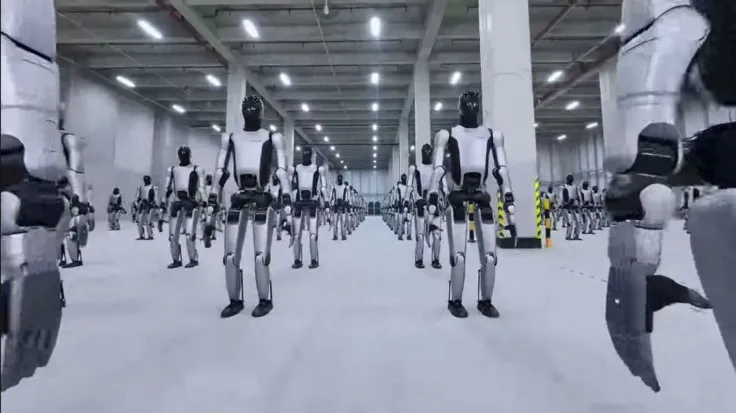

Every so often, a story pops up that feels like it escaped from a futuristic novel and wandered straight into the real world. China’s latest move — deploying full-size humanoid robots to help manage a busy border crossing — is exactly that kind of story.
And yes, it’s real. China is officially rolling out Walker S2 humanoid robots at the Fangchenggang border crossing in Guangxi, right next to Vietnam (source). These aren’t clunky tin cans; they’re sleek, sensor-loaded machines designed to operate in human environments with surprising finesse.
Meet the Walker S2: China’s New Robotic Border Workforce
The Walker S2 is a full-size humanoid robot built by UBTECH Robotics — a company that secured a $37 million government contract to deploy these units at the Vietnam border (source).
Here’s what makes these robots stand out:
- Autonomous battery swapping — they can replace their own batteries in minutes, meaning almost zero downtime.
- Human-like mobility — 176 cm tall, 70 kg, walking at 2 m/s with flexible joints and a rotating waist.
- Advanced vision — RGB binocular stereo cameras for “human-eye” precision, plus depth sensors to avoid collisions.
- Force-feedback joints — allowing delicate handling and responsive movement in crowded spaces.
- BrainNet 2.0 AI architecture — enabling multimodal reasoning and autonomous decision-making.
- Durable construction — composite materials, aeronautical-grade aluminium, and 3D-printed casing.
What These Robots Actually Do at the Border
Despite the sci-fi vibes, their tasks are surprisingly practical. According to multiple reports, the Walker S2 units will:
- Guide passenger queues and direct vehicles
- Answer travellers’ questions using built-in microphones and speakers
- Patrol corridors, waiting areas, and blocked exits
- Monitor crowd patterns and alert human officers when needed
- Check cargo container IDs and seals in logistics lanes
- Support inspections in steel, copper, and aluminium facilities nearby
In other words, they’re less “robotic border guards with laser eyes” and more “tireless civil servants who never need a tea break.”
Why China Is Doing This
China has been pushing hard into humanoid robotics, with national plans to standardise and scale production by 2025 (source). Border crossings — busy, repetitive, and tightly controlled — make the perfect testing ground.
UBTECH aims to produce 5,000 humanoid robots by 2026 and 10,000 by 2027, with deployments planned across factories, logistics hubs, and data centres. The border project is simply the most high-profile example of China’s broader robotics strategy.
A Glimpse of the Future
The idea of humanoid robots managing borders raises big questions about automation, surveillance, and the future of public spaces. For now, the Walker S2 units are assistants rather than enforcers — but they mark a shift. Borders have always been political and symbolic. Now they’re becoming technological too.
Whether you find that exciting, eerie, or inevitable probably depends on how you imagine the future… and how you feel about being told where to queue by a robot with better posture than most of us.